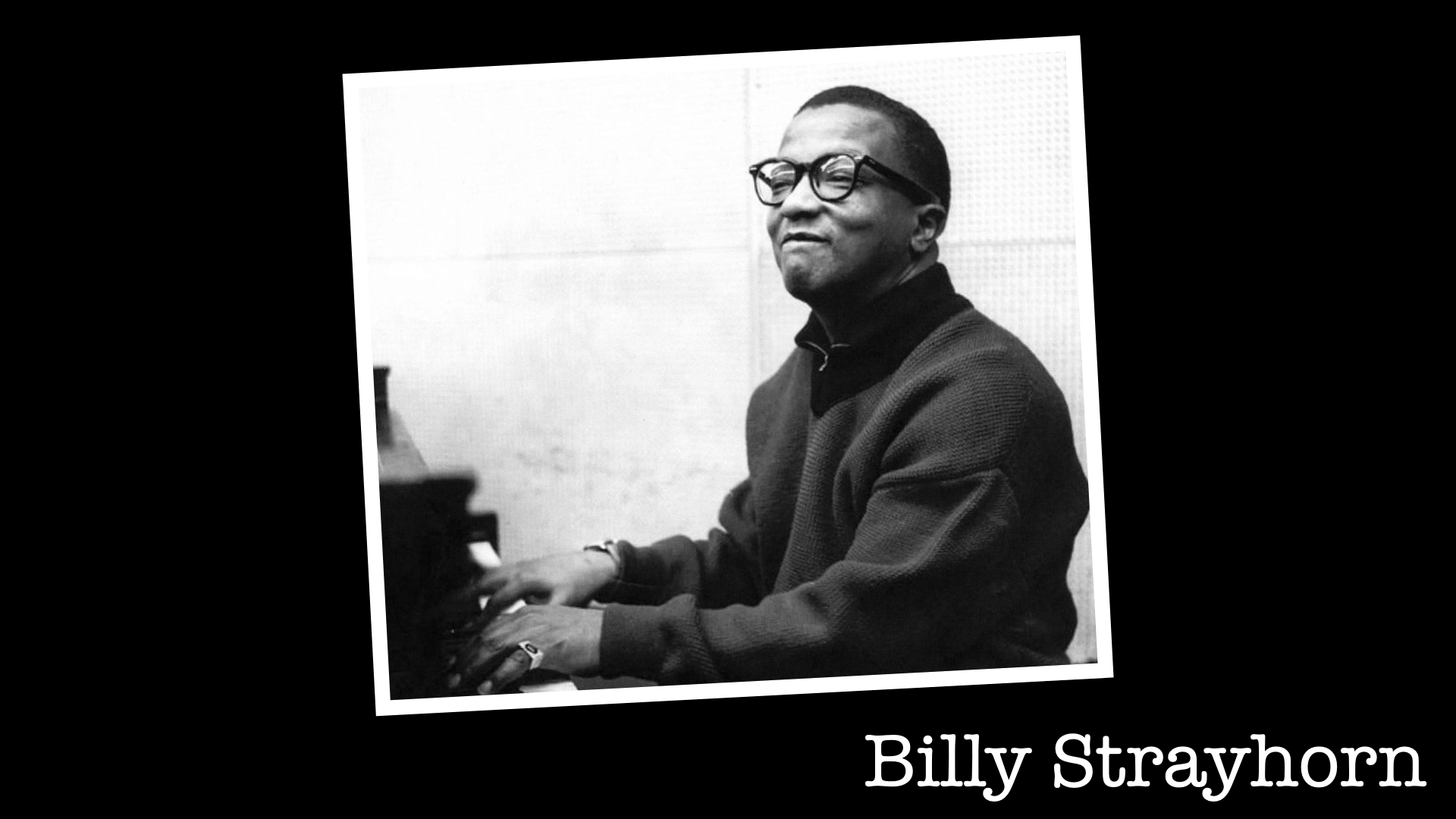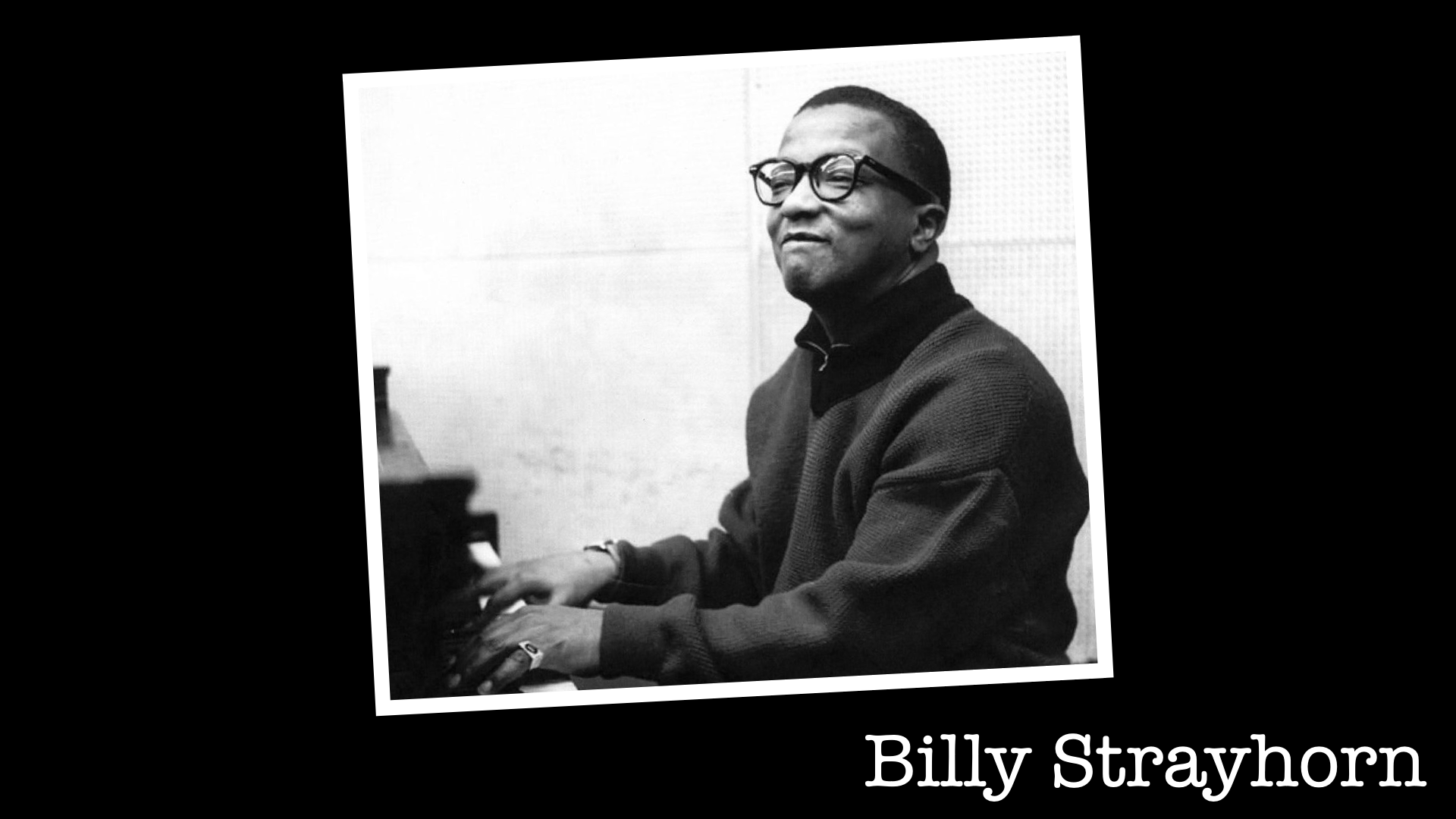
Billy Strayhorn (November 29, 1915 – May 31, 1967) was an American composer, pianist, and arranger whose sophisticated harmonies and lyrical melodies helped shape the sound of modern jazz. Born in Dayton, Ohio, and raised in Pittsburgh, Pennsylvania, Strayhorn discovered music early, studying piano and classical composition at Westinghouse High School while performing in local clubs.
In 1938, he met Duke Ellington, who immediately recognized his extraordinary talent and invited him to join the orchestra. Their partnership lasted nearly three decades, producing jazz standards such as “Take the ‘A’ Train,” “Lush Life,” “Chelsea Bridge,” and “Something to Live For.” Strayhorn’s work blended the discipline of classical composition with the soul of jazz improvisation thus earning him the nickname “the architect behind Ellington’s sound.”
A quiet innovator and openly gay Black man during a time of deep prejudice, Strayhorn infused his music with dignity, grace, and introspection. His compositions became blueprints for emotional complexity in jazz and elevated the genre to an art form of structure and subtlety.
Pittsburgh Connection
Strayhorn moved to Pittsburgh as a child and grew up in the Homewood neighborhood. He attended Westinghouse High School, studied at the Pittsburgh Music Institute, formed a trio that played on local radio, and composed early works including the song that became “Lush Life.” A Pennsylvania state historical marker honoring him stands at Westinghouse High School, and Pittsburgh’s Kelly–Strayhorn Theater (in nearby East Liberty) bears his name alongside Gene Kelly.
STUDIO, NOT STAGE
Concept:
Strayhorn’s brilliance often unfolded behind the scenes — arranging, composing, and perfecting pieces long before audiences ever heard them. Studio, Not Stage invites students to explore the quiet craft of iteration, reflection, and collaboration that precedes performance.
Prompt:
Create something that celebrates unseen brilliance. It could be a sketch, a musical phrase, a storyboard, or a concept map — something that captures the process rather than the final performance.
Guiding Question:
How might we design learning spaces that invite improvisation, collaboration, and curiosity — where every learner plays their part in the band?
Quick Framework:
-
🎧 Listening Lounge: Observe & absorb ideas.
-
✏️ Composition Corner: Generate sketches or first drafts.
-
🌀 Jam Space: Build on one another’s ideas.
-
🎙 Recording Booth: Capture in-progress reflections.
-
🎚 Mixing Board: Revise for clarity.
-
🌟 Mastering Desk: Reflect and celebrate growth.
TAKE THE “A” TRAIN: Improvising Within Structure
NCAS Alignment
-
Creating (Anchor Standard 1): Generate and conceptualize artistic ideas and work.
-
Performing (Anchor Standard 6): Convey meaning through the presentation of artistic work.
-
Responding (Anchor Standard 7): Perceive and analyze artistic work.
-
Connecting (Anchor Standard 11): Relate artistic ideas and works with societal, cultural, and historical context to deepen understanding.
Essential Questions
-
How can listening to the same melody across decades reveal how musical taste evolves?
-
What happens when different artists interpret the same work through their own story, identity, and era?
-
How does jazz model the balance between freedom and structure?
Overview
In this lesson, students explore Take the “A” Train through multiple recordings across decades (1941, 1941, 1957, 1964). Through comparative listening, they analyze how artists innovate within structure — changing tempo, phrasing, and tone while preserving the recognizable pattern. Students engage in critical listening, pattern analysis, and creative response activities to understand improvisation as disciplined innovation.
Process Steps
Step 1 – Listen Across Time
Students listen to several versions of Take the “A” Train (Duke Ellington 1941, Delta Rhythm Boys 1941, Ella Fitzgerald 1957, Charles Mingus 1964).
Students consider:
-
How does each performer “ride the melody”?
-
What details (tempo, phrasing, tone, instrumentation) most dramatically change the feeling?
🧠 Depth & Complexity Prompts: -
Details: What subtle musical features shape emotion?
-
Patterns: What structural elements stay constant?
-
Change Over Time: How does interpretation evolve?
-
Multiple Perspectives: How does each artist’s era or identity influence expression?
Step 2 – Rules and Freedom
Students explore the tension between structure and improvisation.
Guiding Question:
What happens when an artist bends the rules but keeps the pattern?
Activity:
Chart each version’s “rule-keeping” (melodic fidelity, rhythm, form) vs. “rule-breaking” (tempo shifts, solos, expressive risk).
🧠 Depth & Complexity Prompts:
-
Rules: What boundaries define jazz structure?
-
Ethics: When does improvisation honor tradition, and when does it challenge it?
-
Unanswered Questions: How do innovation and mastery coexist?
Step 3 – Compose and Improvise
Students compose or improvise their own short variation on a shared motif or rhythmic phrase — staying “on the tracks” of structure while exploring creative departures.
Extension Options:
-
Visual remix: Layer color, texture, or pattern to represent sonic change.
-
Collaborative jam: Combine student improvisations into a shared ensemble recording.
Step 4 – Reflect and Respond
Students share their interpretations and reflect on the relationship between repetition and reinvention.
Reflection Prompts:
-
How does structure empower creativity rather than limit it?
-
In what ways does improvisation mirror problem-solving in other disciplines?
-
What did you discover about your own creative rhythm?
Application for Gifted Learners
Gifted students explore deeper conceptual parallels between improvisation, innovation, and iteration—recognizing that mastery comes from knowing when and how to diverge from the rules. They analyze jazz as a model for creative cognition: freedom anchored by form.
Possible Extensions:
-
Transcribe or visualize improvisational motifs as data patterns.
-
Compare jazz improvisation to creative writing, coding, or design thinking.
-
Explore social context: How did Harlem Renaissance culture shape artistic freedom?
Culminating Products
-
Comparative listening chart
-
Visual remix of sound (synesthetic translation)
-
Recorded or written improvisation
-
Reflective essay or digital story on freedom within form
EVER UP AND ONWARD
Concept:
This reflective activity echoes Strayhorn’s resilience and quiet excellence — a mindset of continual growth rather than perfection.
Prompt:
“Ever Up and Onward” was Strayhorn’s life motto. Use it as a reflection ritual: pause to recognize growth (Up) and identify your next step (Onward).
Structure:
-
UP (30 seconds): What’s one thing you’ve leveled up in lately — a new skill, insight, or risk you’ve taken?
-
ONWARD (30 seconds): What’s one thing you’re ready to move onward with — a goal, habit, or next curious step?
Optional Extension:
Collect class reflections into a shared “Soundtrack of Growth,” pairing each student’s reflection with a short musical excerpt or visual motif.
Online Resources